Type "work tent" into a search engine and you get event canopies, backyard gazebos and real pro work tents, all mixed together. All three look alike: a fabric roof, a tube frame, setup in a few minutes. On the job, they have nothing in common.
This comparison breaks down the three types: what each one is really for, where it falls short, and how to choose for your trade.
The pop-up work tent
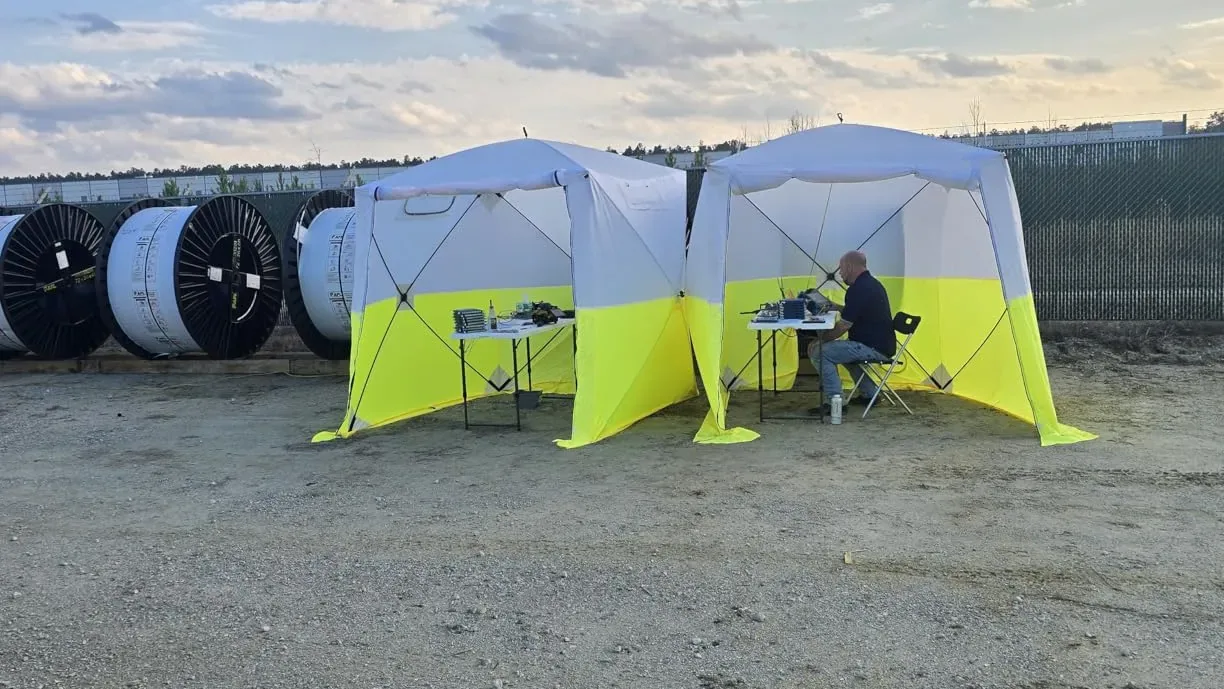
Built for: short technical jobs (1 to 8 hours), 1 or 2 people, bad weather. Typical trades: fiber, electrical, plumbing, roadwork, telecom.
Typical specs:
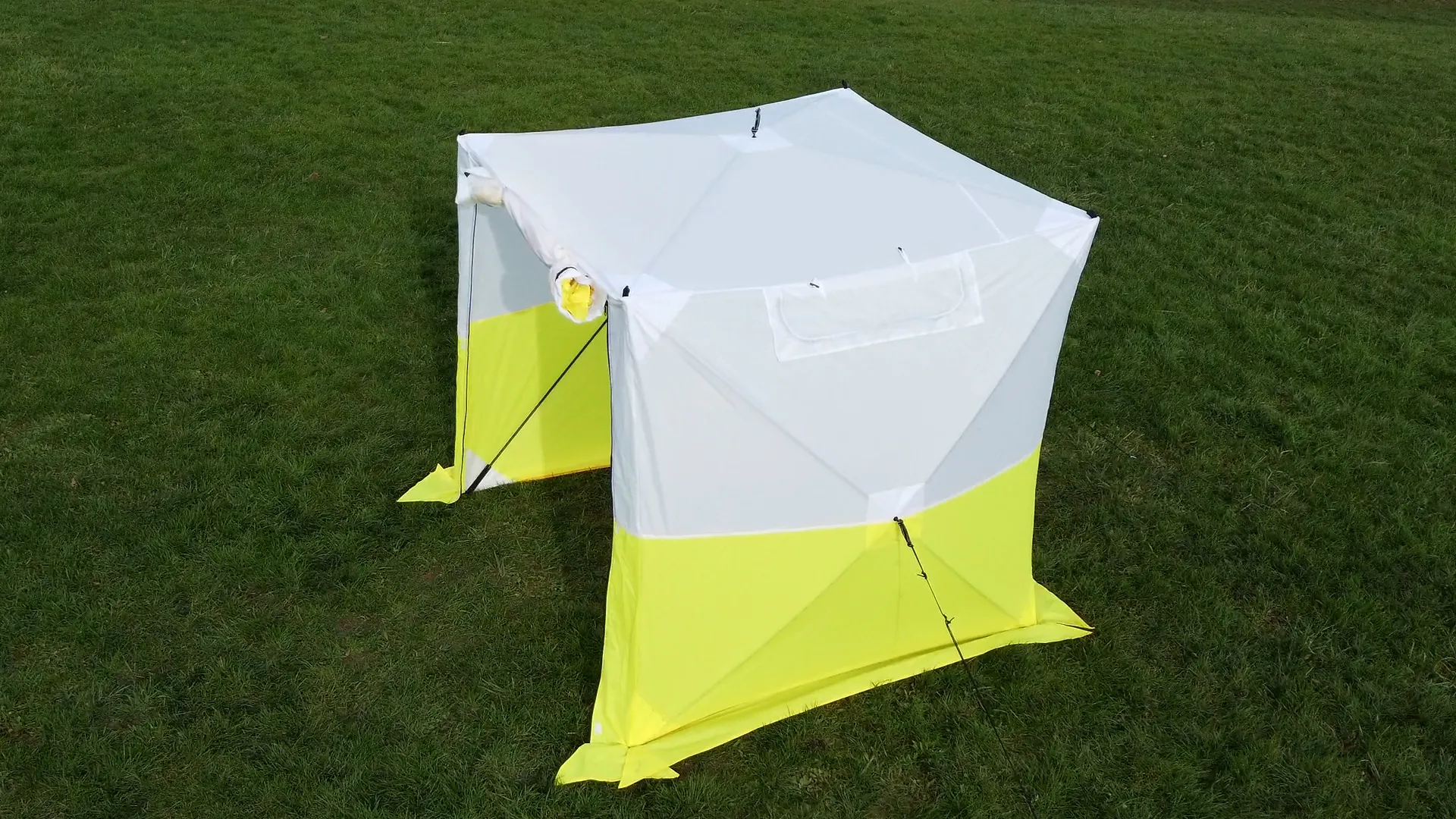
- Footprint: 6.2 x 6.2 ft to 8.2 x 8.2 ft
- Inside height: about 6.5 to 7 ft (room to work standing up)
- Fabric: reinforced Oxford with a PU coating rated 2000 to 3000 mm
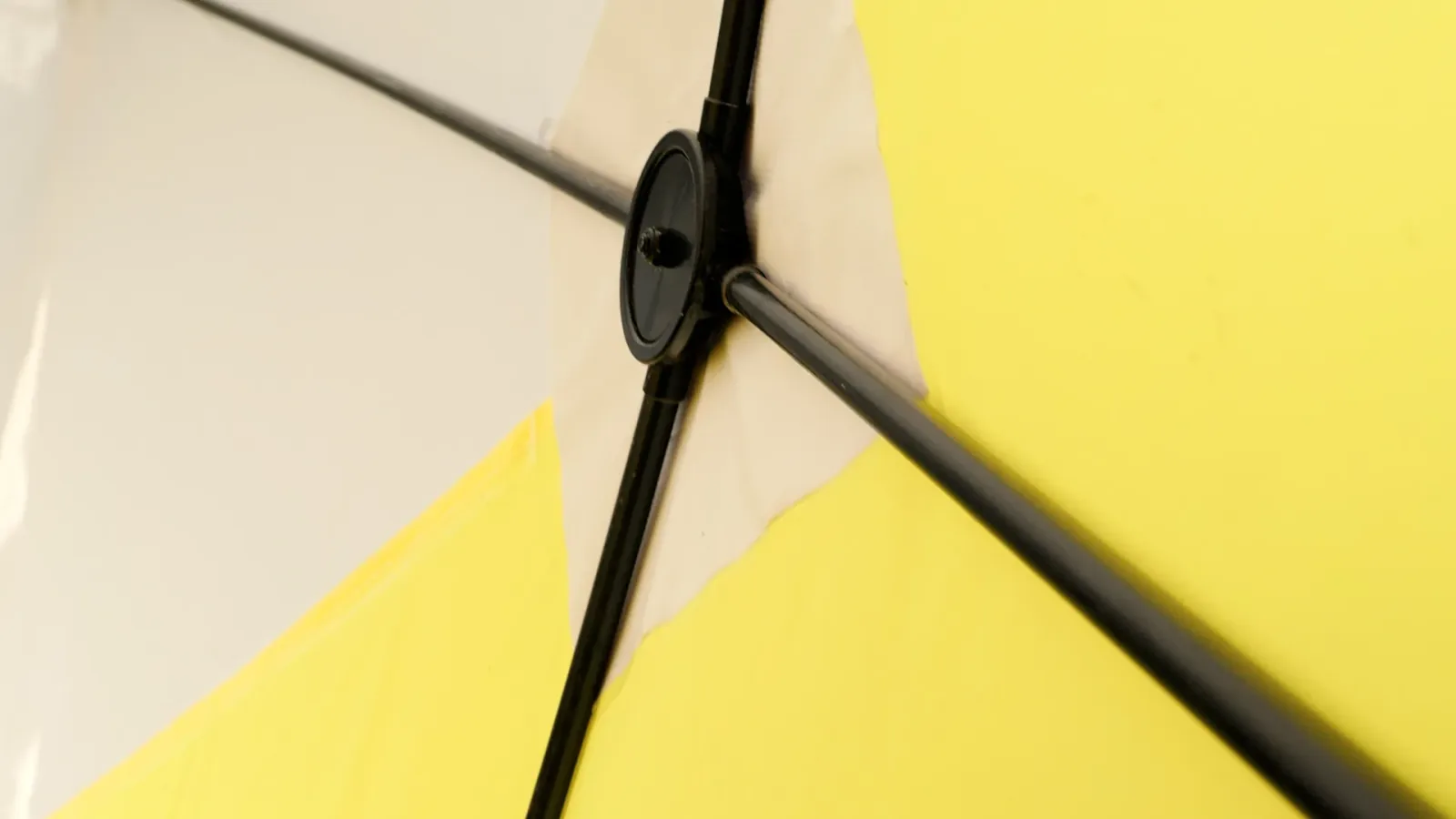
- Frame: composite fiberglass (10 to 12 mm) or thin steel
- Weight: about 15 to 26 lbs
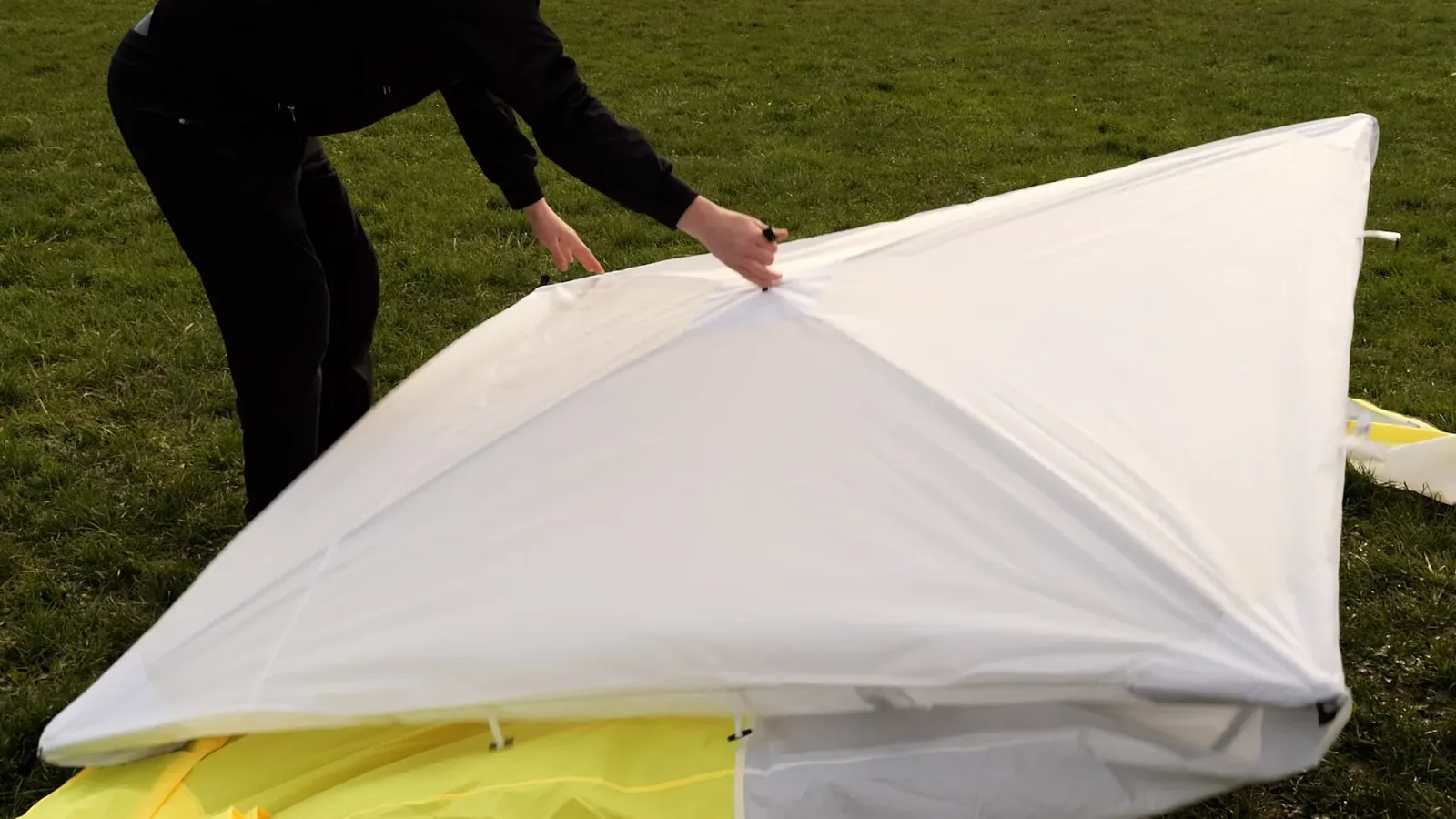
- Setup: automatic pop-up in 30 to 60 seconds, one person
It's made to stand up to driving rain, moderate wind and daily use over the long haul. Models certified CPAI-84 also use a flame retardant fabric, which matters on electrical work. They come in high-visibility job site colors (yellow, orange, red), depending on local requirements.
The event canopy
Built for: one-off events (markets, trade shows, fairs), 4 to 12 people under cover, 1 to 3 days, with mild weather in the forecast.
Typical specs:
- Footprint: about 10 x 10 ft to 20 x 40 ft (modular)
- Height at the eave: about 6 to 7 ft
- Fabric: opaque PVC or polyester, 6 to 9 oz/yd² (200 to 300 g/m²)
- Frame: galvanized steel or aluminum
- Weight: about 55 to 175 lbs
- Setup: 2 to 4 people, 15 to 30 minutes, hammer required
Designed to shelter a crowd, not to handle daily field work with a heavy tool case. An event canopy is heavy and awkward, and it needs flat ground and a crew to put it up. It's the wrong tool for a solo job at a roadside telecom cabinet.
The folding gazebo
Built for: backyard and leisure use, outdoor meals. Not a pro product.
Typical specs:
- Size: usually 10 x 10 ft
- Fabric: polyester, 3 to 4.5 oz/yd² (100 to 150 g/m²), low water resistance
- Frame: thin aluminum or light steel
- Weight: about 26 to 55 lbs
- Setup: 2 people, about 5 minutes, accordion frame
Made for occasional use in good weather: low wind resistance, rain protection limited to a light shower, and a short life under heavy use. Press a gazebo into pro service and you pay for it in frequent replacements and jobs cut short.
Decision table
| Criterion | Work tent | Event canopy | Gazebo |
|---|---|---|---|
| Who it's for | Field pros | Events | Leisure |
| Solo setup | Yes (about 60 s) | No | No (2 people, about 5 min) |
| Rain protection | PU coating, 2000 to 3000 mm | Opaque PVC | Light rain only |
| Job site visibility | High-vis yellow | Plain colors | Decorative colors |
| Daily use | Built for it | Oversized | Likely to break |
| Typical weight | 15 to 26 lbs | 55 to 175 lbs | 26 to 55 lbs |
The classic mistake to avoid
A classic mistake when you're starting out: buying a 10 x 10 ft gazebo "because it's cheaper" and putting it up every day. Here is what you end up with:
- Fabric faded by UV (untreated polyester)
- Seams coming apart (stitched, not heat-sealed)
- A bent frame (thin aluminum deforms at the slightest knock)
- Time to buy another one, and the savings are gone
The other mistake: using an event canopy for solo field work. Twenty minutes of setup every morning adds up to more than 80 hours over 250 working days.
The right call: choose the structure for the way you actually work, not for the sticker price. A gazebo is cheaper to buy, not cheaper to own once you start replacing it. And the time a poorly matched structure costs you every morning never comes back.

JAX3 Work Tent
Sets up in about 60 seconds · 11 mm fiberglass poles · reinforced Oxford fabric, PU3000mm waterproof coating · 5-year frame warranty