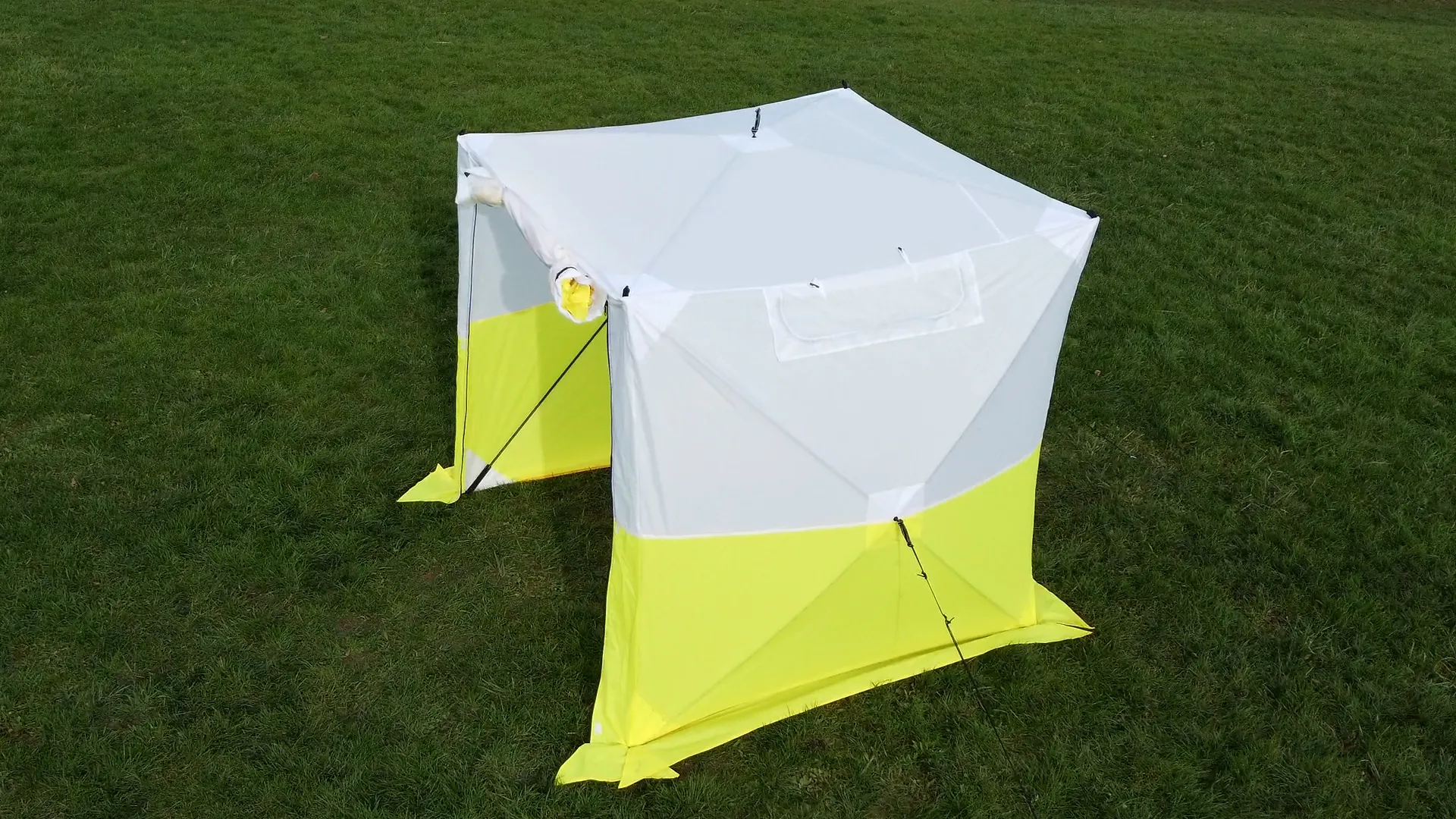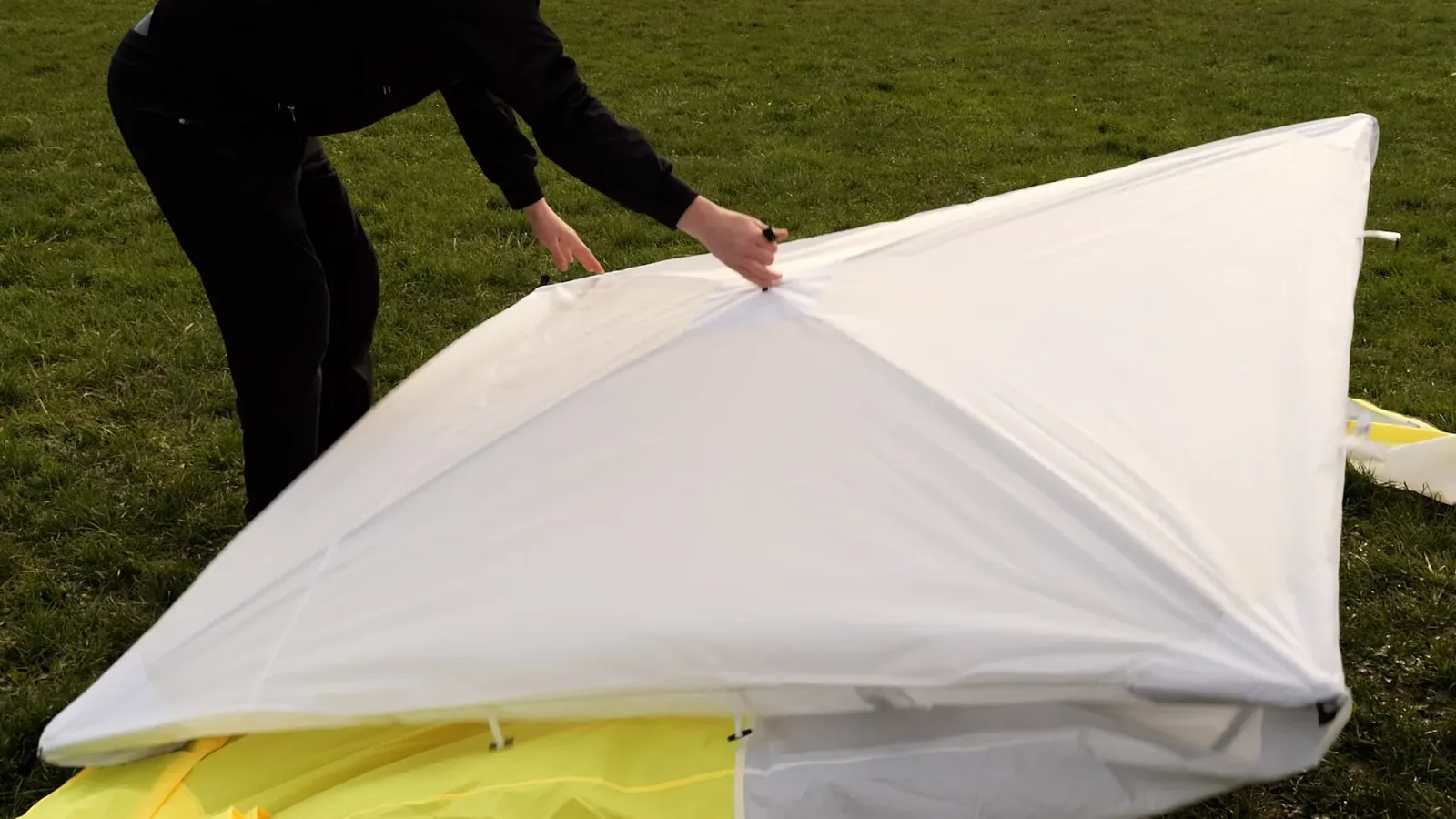
On a work tent, the frame does the heavy lifting. Fabric can be repaired (seams, coating); the frame, as a rule, can't. Aluminum, fiberglass and steel cover the pro market, and each one makes a clear trade-off.
Aluminum: light but expensive
Aluminum is still the benchmark for high-end backpacking tents. On work tents it's less common, because the weight it saves rarely justifies what it costs.
Pros:
- Very light, the lightest of the three materials
- Good corrosion resistance (7000-series alloys)
- Good spring-back: it straightens out after moderate bending
Cons:
- Cost: well above an equivalent fiberglass frame
- Conducts electricity (a risk on electrical work)
- Fails suddenly when overloaded, with no gradual warning
Composite fiberglass: the modern pop-up standard
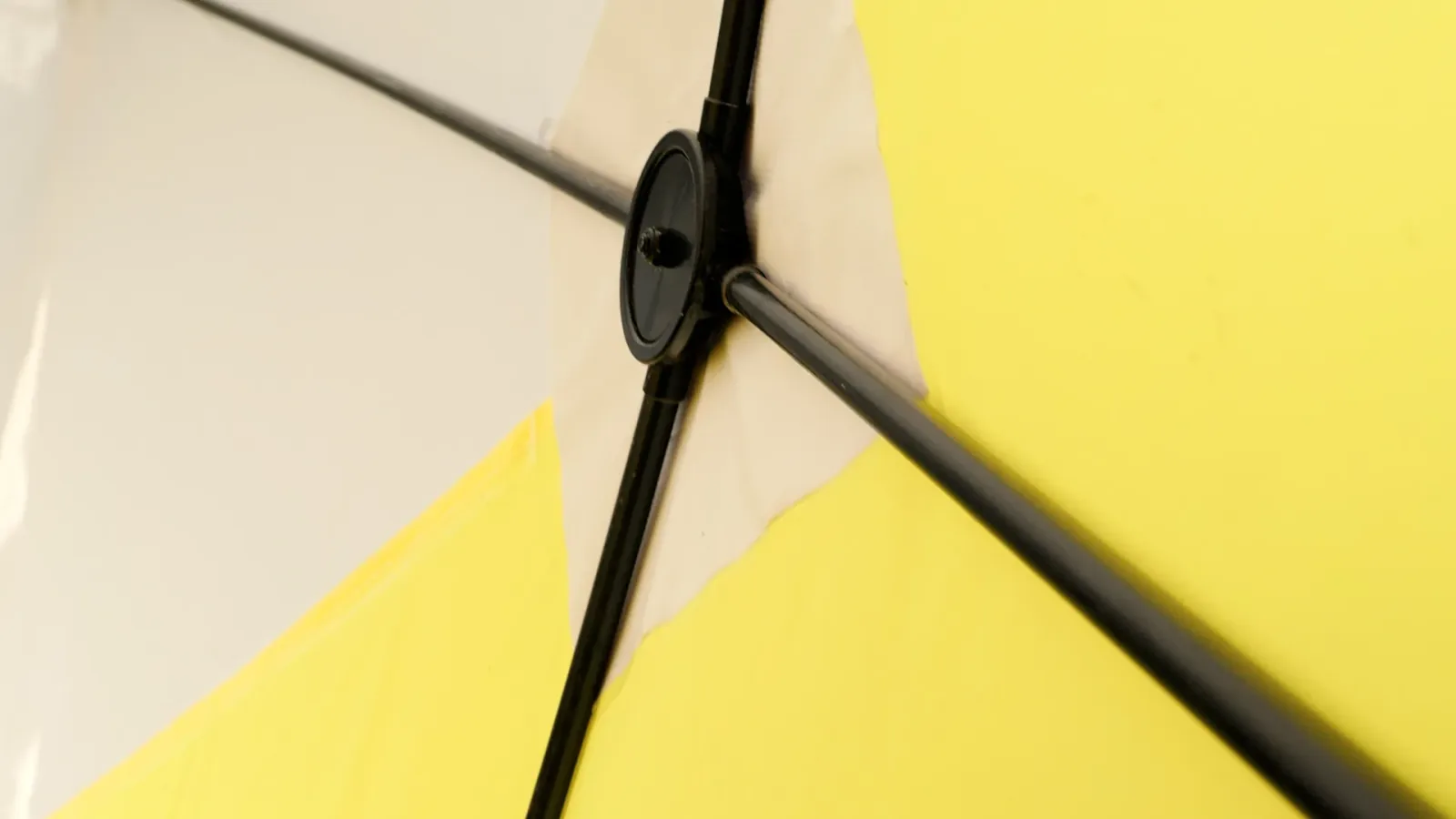
Composite fiberglass (glass fibers set in a resin matrix) is a common frame material for pop-up tents, pro work tents included.
Pros:
- Excellent spring-back: it flexes a long way without breaking
- Makes the pop-up mechanism possible (a pop-up needs a frame that opens under tension)
- Electrically insulating: no conductive frame around you on electrical work
- Non-magnetic: nothing in the frame to interfere with telecom instruments (OTDR, power meter, fusion splicer)
- Rust-proof: unaffected by salt water or damp air
- Cost: the baseline the other two are measured against
Cons:
- Heavier than aluminum at the same diameter
- When it does break, it fails gradually (the fibers splinter), not all at once, and you can see it coming
- Quality depends heavily on diameter: a 7 mm frame is fragile, an 11 mm frame is solid
Pole diameter: the spec to check first
On Amazon you'll find plenty of pop-up tents whose fiberglass frame is advertised as "reinforced." Here is what the diameter actually tells you:
- 7 to 8 mm: entry-level camping gear. It wears out quickly under heavy use and is the first to give in a strong gust.
- 9 to 10 mm: mid-range. Holds up to moderate use and does well on light job site work.
- 11 to 12 mm: pro grade. Made for heavy use, it takes repeated stress without losing its shape.
Between 8 mm and 11 mm (roughly 5/16 in versus 7/16 in), the difference looks small. In cross-section, though, an 11 mm rod carries almost twice as much material as an 8 mm rod, because area grows with the square of the diameter (πr²). Bending strength grows even faster than that.
Steel: tough but heavy
Steel is still used on event canopies and heavy structures. On portable work tents, you'll rarely see it.
Pros:
- Very sturdy: handles heavy loads (snow, wind)
- Low cost for its diameter
- Can be welded if it needs a repair
Cons:
- Heavy: far heavier than an equivalent fiberglass frame
- Prone to rust (unless it's stainless)
- No pop-up mechanism: rigid steel tubing doesn't spring open
- Conducts electricity and is magnetic
Comparison table
| Criterion | Aluminum | 11 mm fiberglass | Steel |
|---|---|---|---|
| Weight | Lightest | Light | Heavy |
| Cost | High | Lowest | Low |
| Durability | Good | Good | Very good |
| Pop-up mechanism | No | Yes | No |
| Electrically insulating | No | Yes | No |
| Non-magnetic | Yes | Yes | No |
| Strong wind | Good | Good | Very good |
| Typical use | Premium backpacking | Pop-up work tents | Heavy canopies |
The verdict for job site use
For a portable pop-up work tent (daily setups, outdoor jobs, technical trades), 11 mm composite fiberglass is the sweet spot:
- It makes the pop-up mechanism possible, a big time saver
- It's electrically insulating for electrical work, and non-magnetic around telecom instruments
- It's built to take heavy daily use
The one case where 11 mm fiberglass isn't enough: heavy logistics (10 x 10 ft and up, setups that stay in place for several days, structures that have to carry snow). There, steel is still the right material, at the cost of weight and handling.

JAX3 Work Tent
11 mm fiberglass poles · non-magnetic, electrically insulating, rust-proof