When a pop-up tent gives out early, the cause is often not a defect but a handling mistake, repeated day after day. Here are five that keep coming up, and how to avoid them.
Popping it open without checking the space
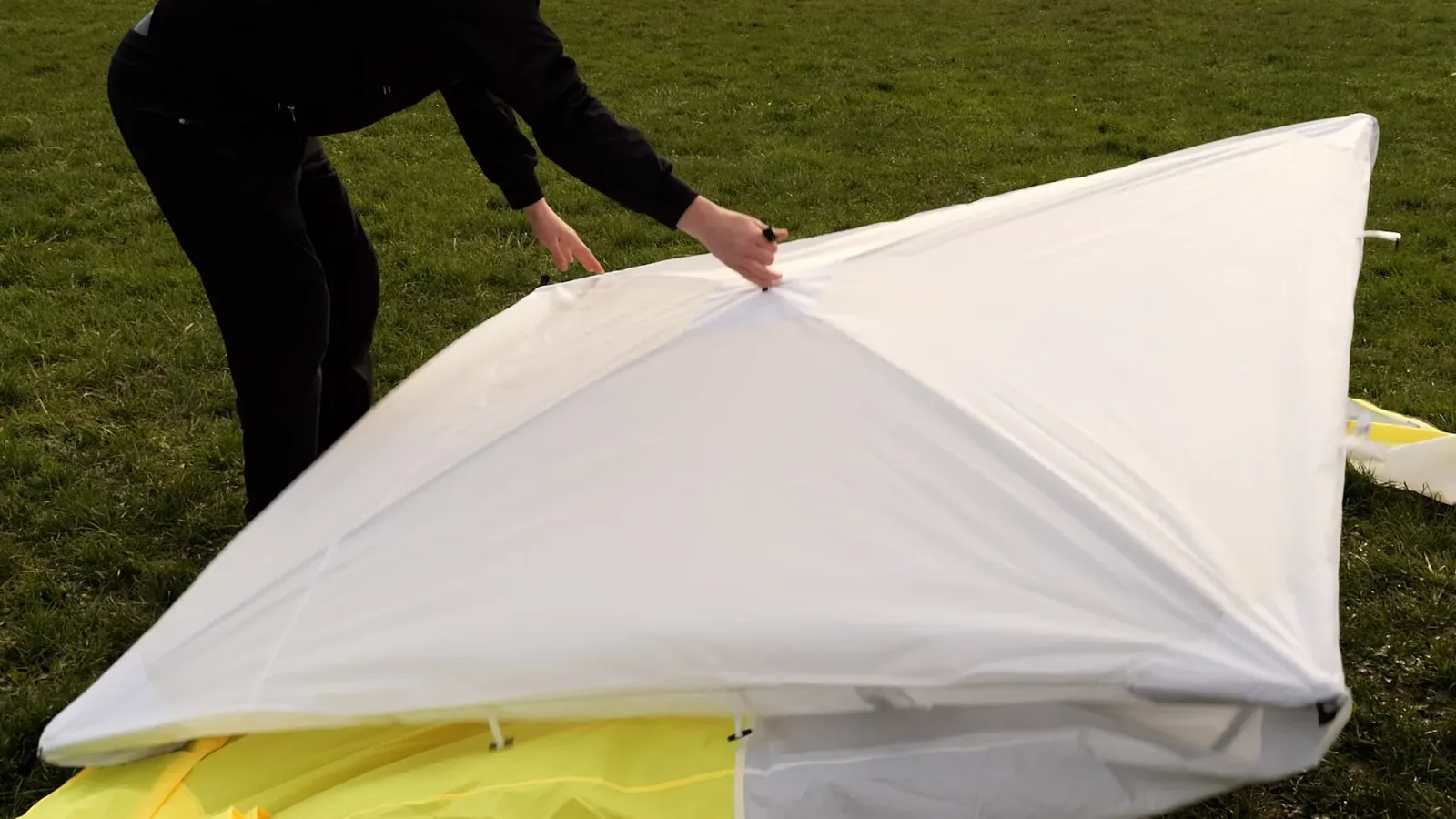
A pop-up frame releases all of its stored tension at once. Open it in a tight spot (between two trucks, against a wall, next to a window) and it can hit and break something, or jam halfway and never open all the way.
The fix: clear a circle about 8 ft (2.5 m) in radius around the spot. Lay the tent flat on the ground, opening facing up. Take one step back before you pull the release strap.
Leaving the stakes in the bag
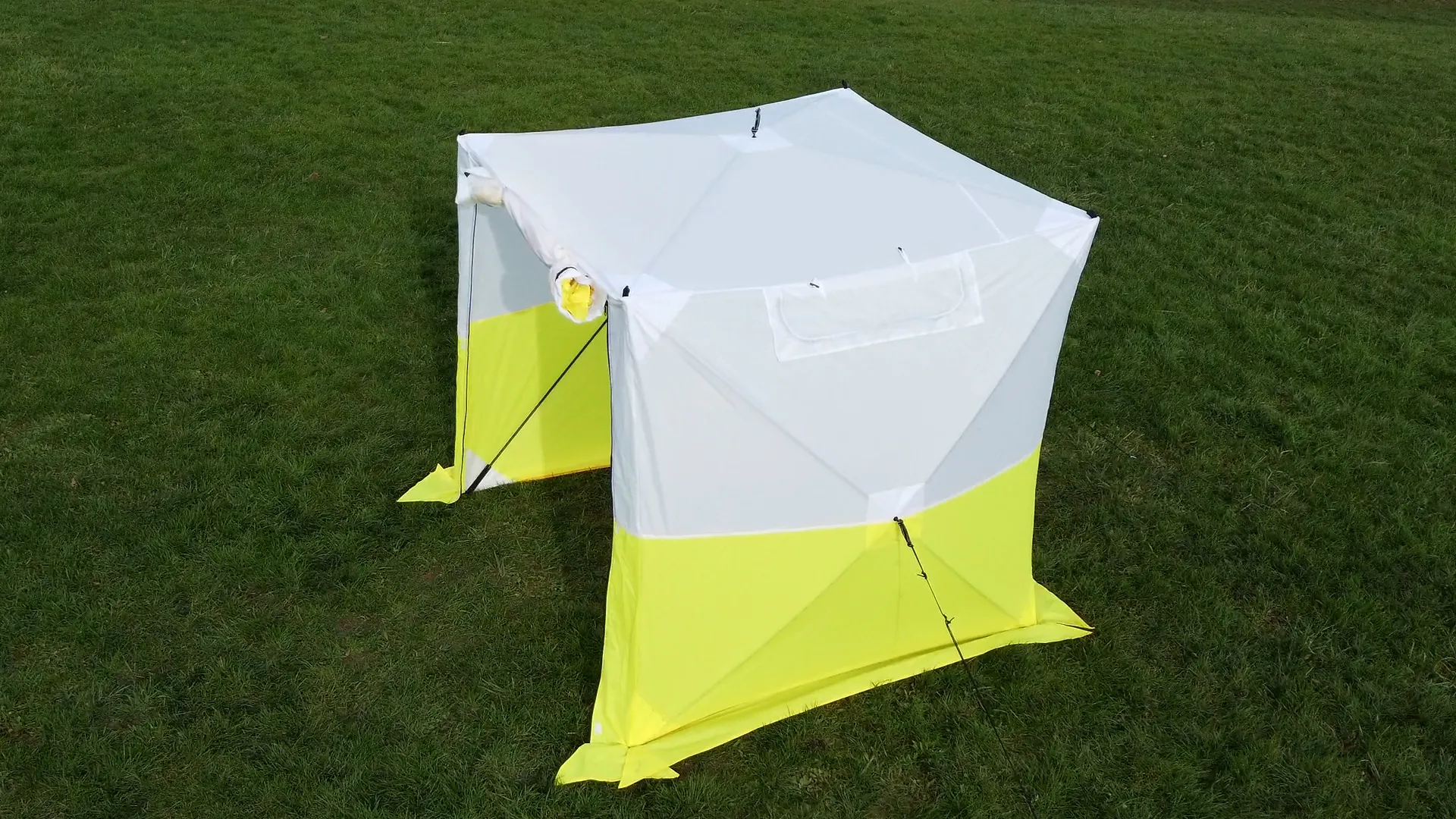
A pop-up work tent is built to be light. Without stakes, a single gust can carry it off: it's a tent, not dead weight. The stakes that come with it (usually four) are a must, even in calm weather. Wind can pick up in seconds.
The fix:
- Drive all four stakes right after setup
- Angle the stakes at 45°, leaning away from the tent (the strongest hold against pull-out)
- Add the guy ropes whenever wind is in the forecast
- On hard ground (concrete, asphalt), use weights instead: sandbags, or cinder blocks of 22 to 33 lbs (10 to 15 kg)
Pointing the door into the wind
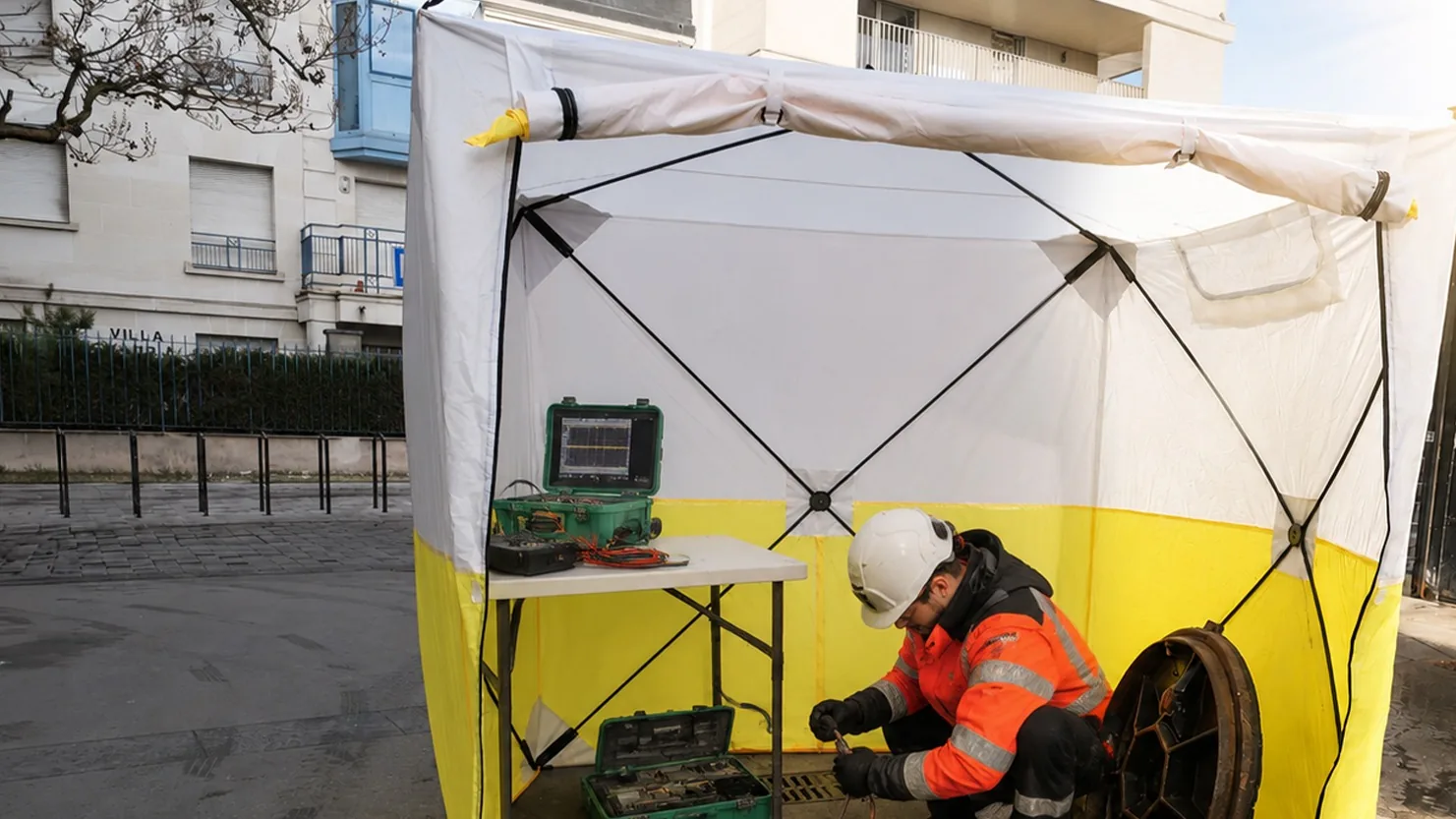
With its door facing the wind, a tent acts like a sail. The pressure that builds up inside can lift it even when it's staked. Turn the door away from the wind and the wind slides over the fabric with nothing to catch.
The fix: before you drive the stakes, check the wind direction (hold up a strip of flagging tape or drop a pinch of grass). Set the door perpendicular to the wind, or facing away from it. If the wind shifts during the day, move the tent or turn it.
Packing it away wet or dirty
PU-coated Oxford fabric sheds rain on the outside. Rolled up damp in its bag with no airflow, though, it quickly grows mildew spots. Dust, leaves or bugs trapped in the folds make it worse.
The fix:
- Dry the tent before packing it, even partly (wipe it down with a microfiber cloth)
- If you have to pack it wet, open it back up as soon as you get back so it can air-dry
- Under heavy use, clean the fabric about once a month (lukewarm water and mild soap, never harsh detergents)
- Store it somewhere with airflow, not in a sealed truck box sitting in the sun
Forcing the fold
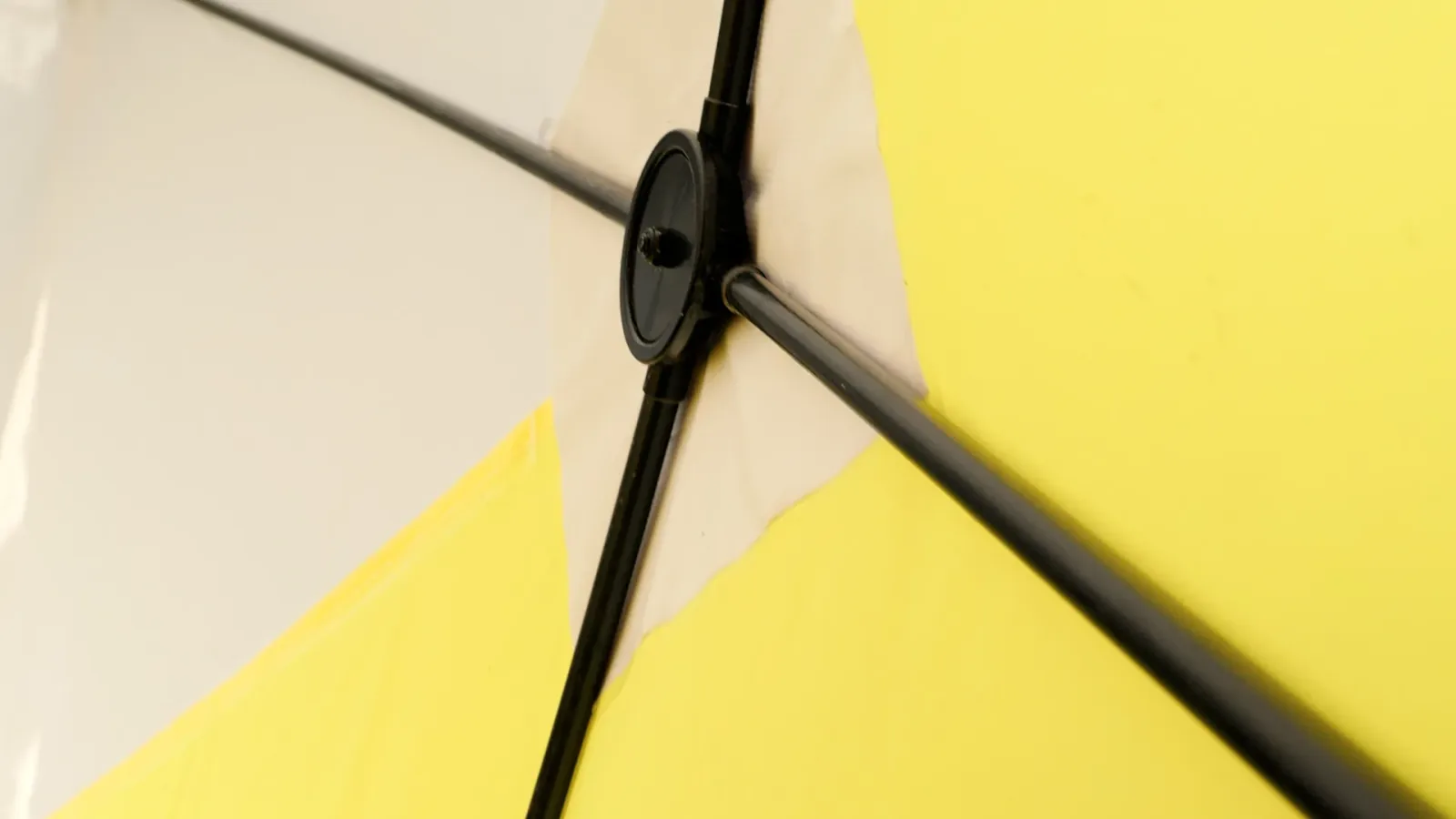
Folding a pop-up follows a precise mechanical sequence: you twist the frame into a spiral, lay the hoops on top of each other, then slide the whole thing into the bag. Forcing it flat, the way you would a regular tent, strains the fiberglass joints and can break the frame.
The rule of thumb: folding is the setup in reverse. The first time, give yourself a few minutes. After a few tries, it goes fast. Force it, and something breaks.
Field tip
Before the first setup, spend five minutes with the instructions or a video of the setup and fold. It keeps you from picking up habits that wear the tent out.
The bottom line
How long a pop-up work tent lasts on the job depends less on the product than on the five habits above. They add about 30 seconds to each setup, and they save you from replacing the tent before its time.

JAX3 Work Tent
Sets up in about 60 seconds, no tools · 4 heavy-duty stakes and guy ropes in the box · about 19 lbs, carry bag included