Outdoor fiber work, whether at a roadside cabinet, a splice point, a terminal or a fiber distribution hub, exposes you to three things nobody controls: the weather, the light and how clean the surroundings are. A single dust particle on an SC/APC connector can add 0.3 dB of loss. A drop of water left in a splice closure can make the link fail acceptance testing a week after the install.
This article covers the practical protections fiber techs use in the field, beyond nitrile gloves and isopropyl alcohol.
Weather: rain, wind and humidity
Fiber does not like water. A mechanical connection left out in the rain is a connection you are likely to redo. Fusion splicing has a weak spot of its own: wind. Gusts cause micro-vibrations that shift the fibers in the V-grooves by a few microns, enough for a poor splice (loss above 0.1 dB).
The old fix: a tarp stretched between two ladders or a splicing umbrella. Both have their limits. The tarp flaps in the wind, and the umbrella covers barely 11 sq ft (1 m²) and goes over with the first strong gust.
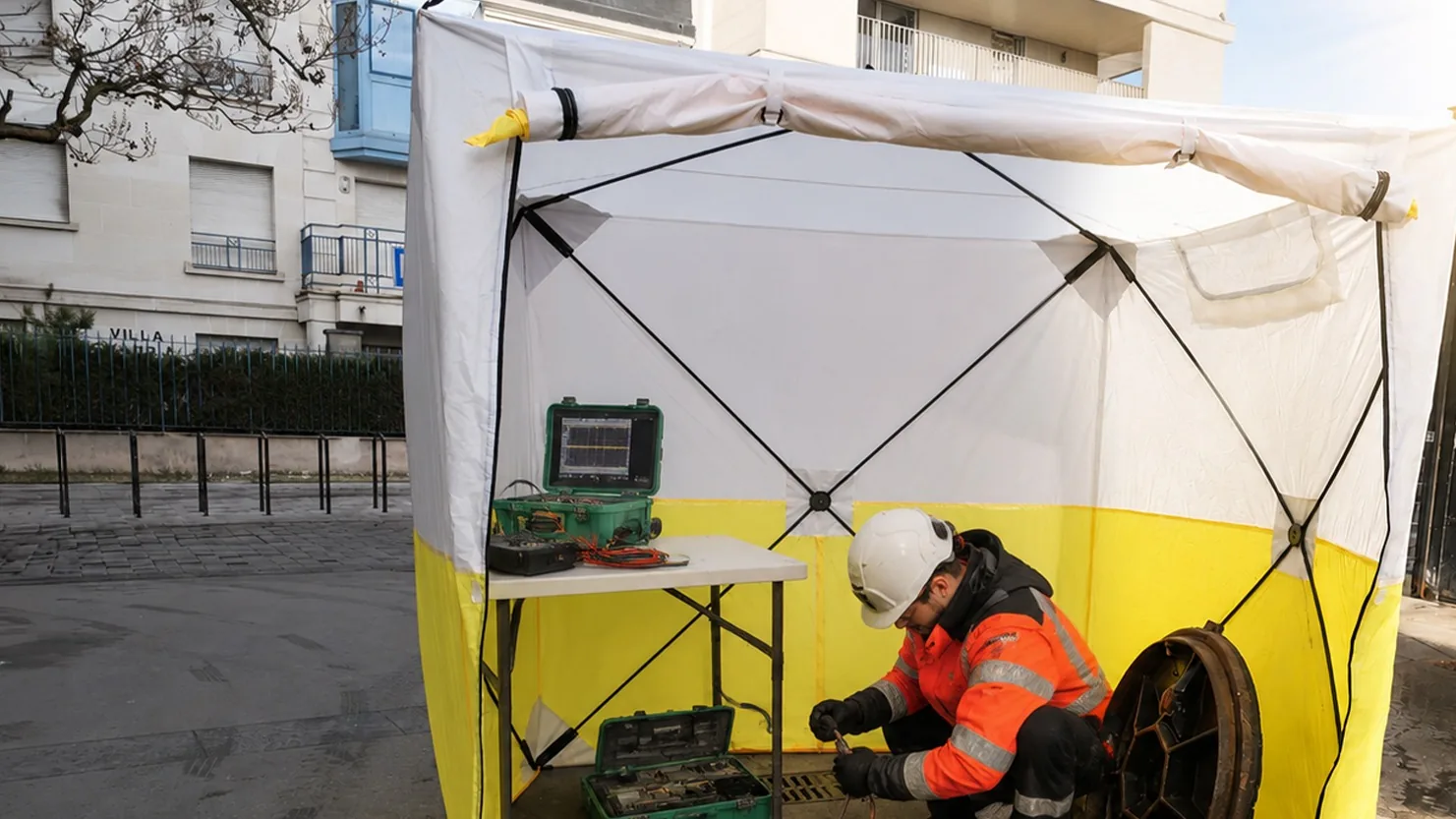
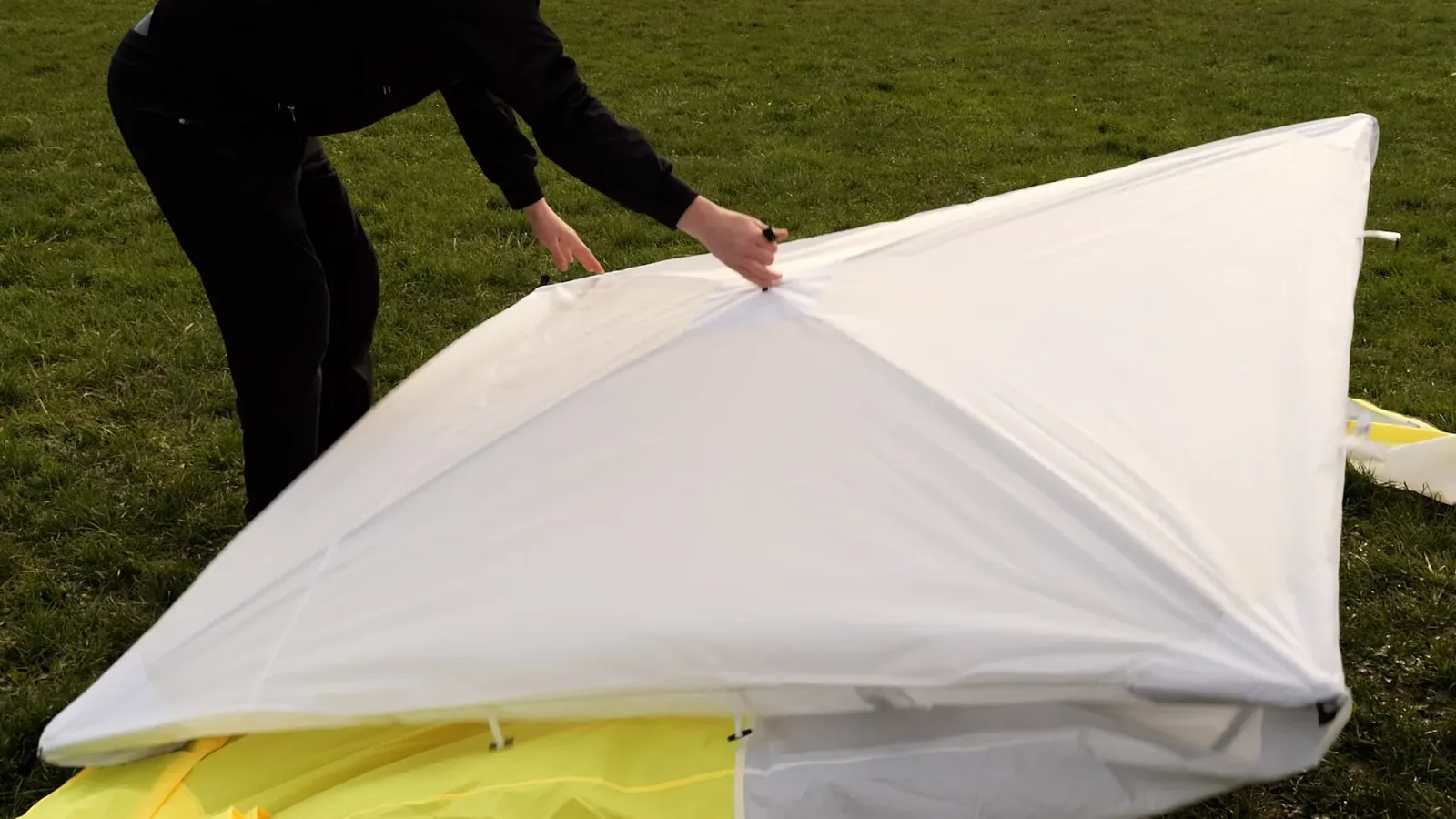
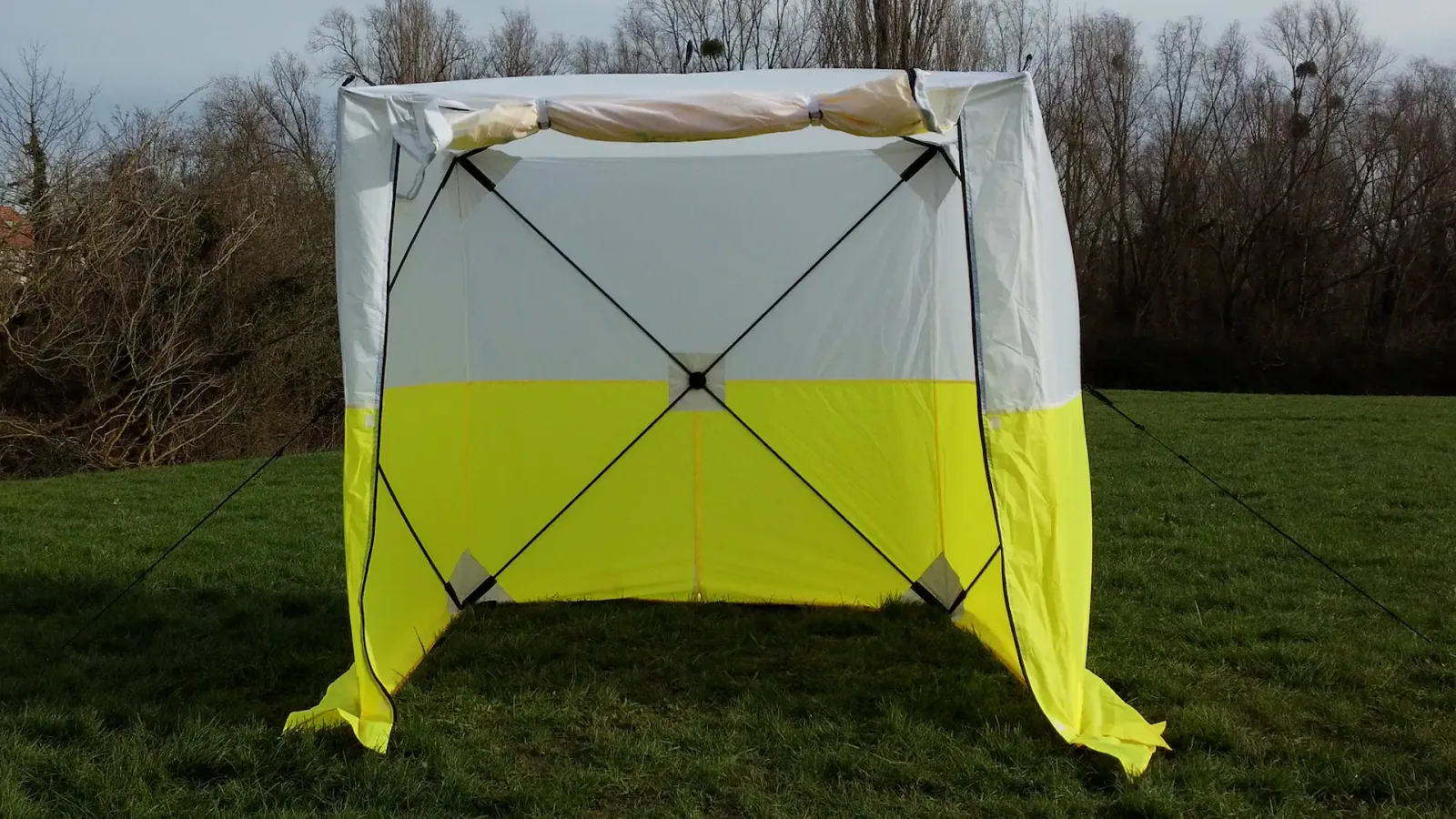
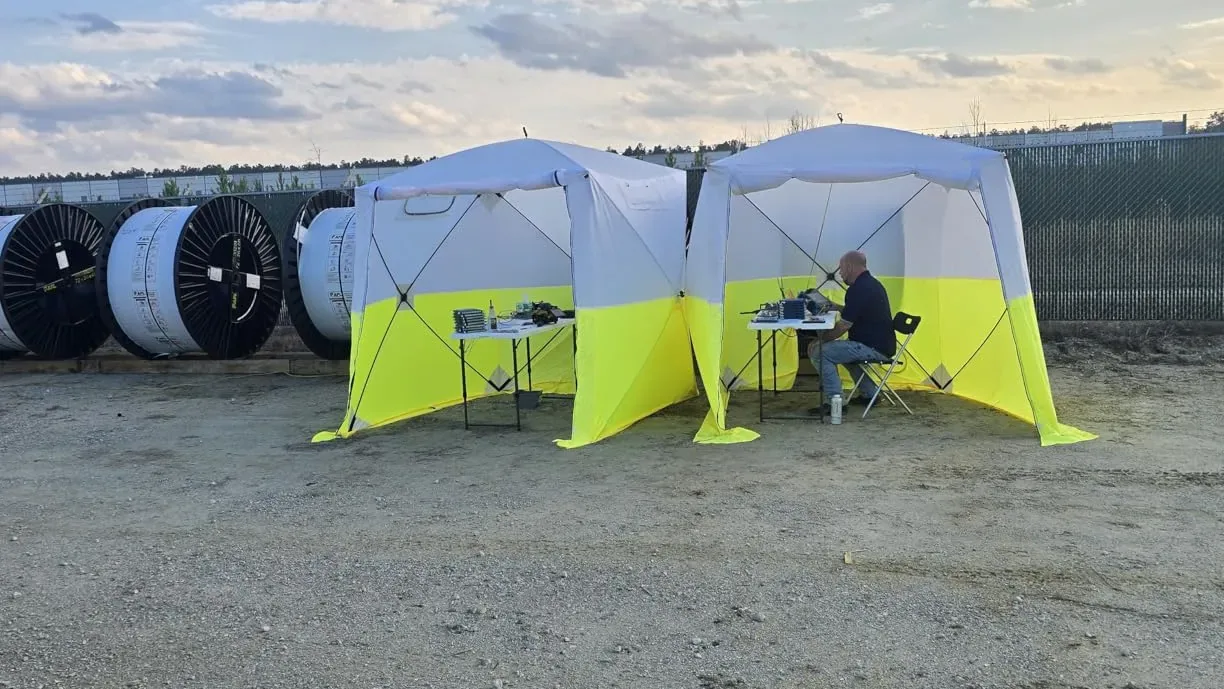
The better option: a dedicated pop-up work tent. One person sets it up in about 60 seconds, with no tools. It gives you a 6.2 x 6.2 ft footprint and 7 ft of standing height, enough room for your splicing kit and for you, standing up. Its reinforced Oxford fabric with a PU3000mm waterproof coating keeps you dry in heavy rain, and a waterproof rear cable port brings the fiber in while the tent stays closed.
Light: reading color codes without mistakes
Fibers follow a standard 12-color code: blue, orange, green, brown, slate, white, red, black, yellow, violet, rose and aqua. Misread the code and you splice the wrong fiber, which means a trouble ticket and another truck roll. Under a blue tarp or a black umbrella, red looks brown and rose looks white.
The rule of the trade: always read color codes under neutral light, diffused if possible, never against the light. A tent with a white, translucent upper section diffuses daylight without tinting it. That is exactly what separates a tent built for the trade from a camping tent.
If you do not have that, two fallbacks:
- An LED headlamp in neutral white, 5000K (not warm white, not cool white)
- A smartphone app that photographs the fiber and identifies the color code (handy as a backup)
Cleanliness: the war on particles
Dust is the threat that follows you onto every outdoor job. A 5-micron particle on an SC/APC end face can throw off your OTDR reading by up to 0.5 dB. At roadside cabinets, passing trucks kick up a layer of abrasive dust that settles again within seconds after every gust.
The method:
- Set up your workspace under cover (tent, rigid shelter) before you open the splice closures
- Clean the ferrules with a one-click cleaner every time, not just at the start
- Keep the dust caps on the patch cords until the very last second
- Wait more than 5 minutes before splicing if a gust kicks up dust nearby
Good to know
A splice that fails because of dirt means a second truck roll, plus the hours lost on the first one. A shelter is bought once and reused on every job. Put the two side by side and the math is quick.
Equipment checklist for outdoor fiber work
The minimum kit for a fiber tech working at a roadside cabinet or a splice point:
| Category | Must-have | Nice to have |
|---|---|---|
| Weather shelter | Pop-up tent with about 6 ft (1.8 m) of headroom or more | Heavy-duty carry bag, steel stakes |
| Light | 5000K headlamp, 8-hour battery | Second LED light inside the tent |
| Cleaning | SC/APC one-click cleaner, IPA wipes | Fiber inspection scope with a screen |
| Splicing | Fusion splicer, cleaver, carrying case | Magnetic tool tray |
| Testing | OTDR, power meter, test jumpers | Visual fault locator (VFL) pen |
| Safety | Full PPE, traffic cones and road signs | High-visibility vest, vented hard hat |
The bottom line: count what a redo costs you
Say you run 4 jobs a day, 220 days a year: that is 880 jobs. Every one you redo because of rain, wind or dust means another truck roll and more lost hours. Put your own number on a truck roll, multiply, and you know what working unprotected really costs you.
Set that against a shelter you reuse on every single job. Nobody questions what a fusion splicer is worth. A shelter that protects every one of those splices deserves the same logic.

JAX3 Work Tent
Up in about 60 seconds · 7 ft standing height · waterproof rear cable port · CPAI-84 flame retardant