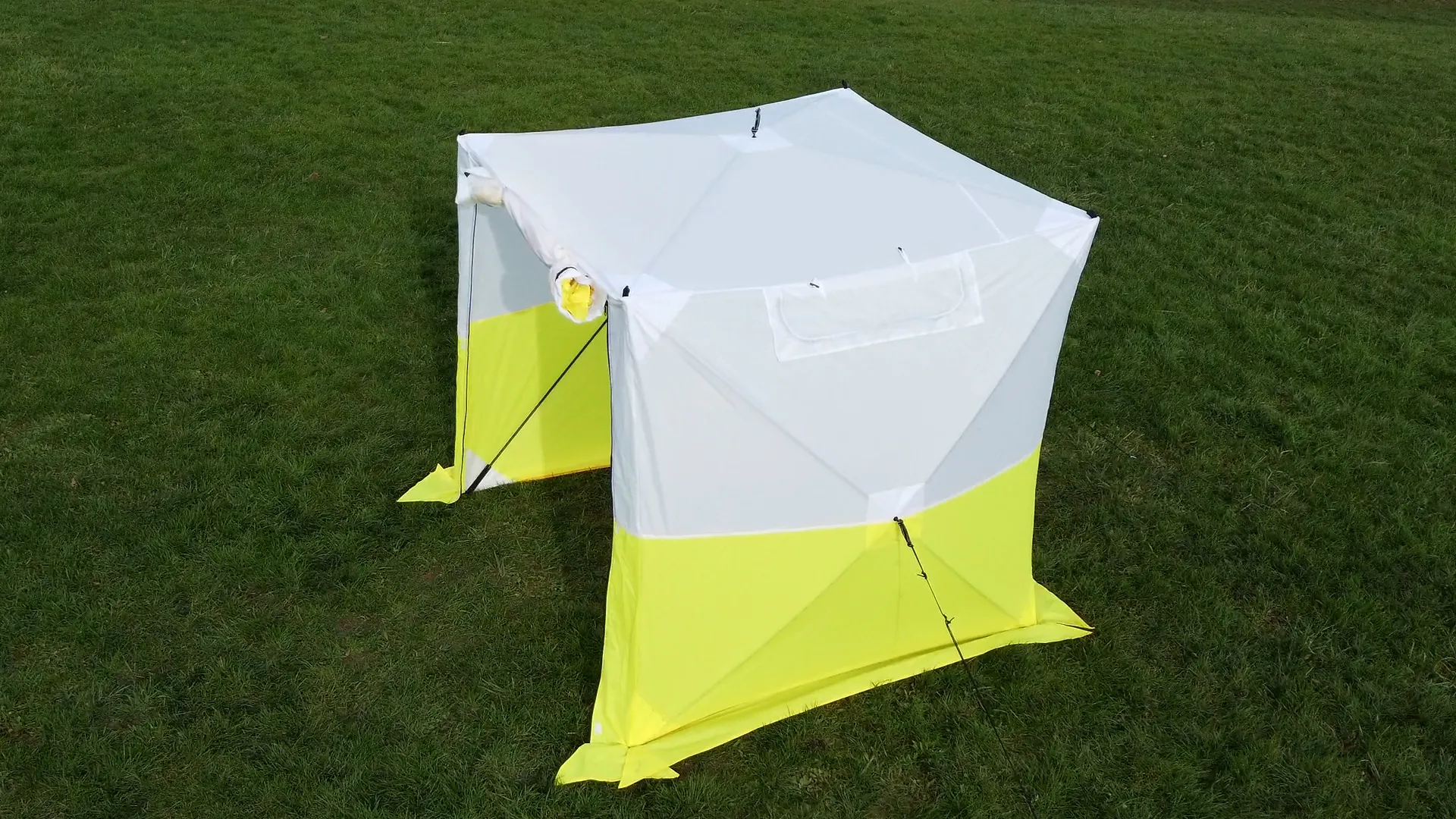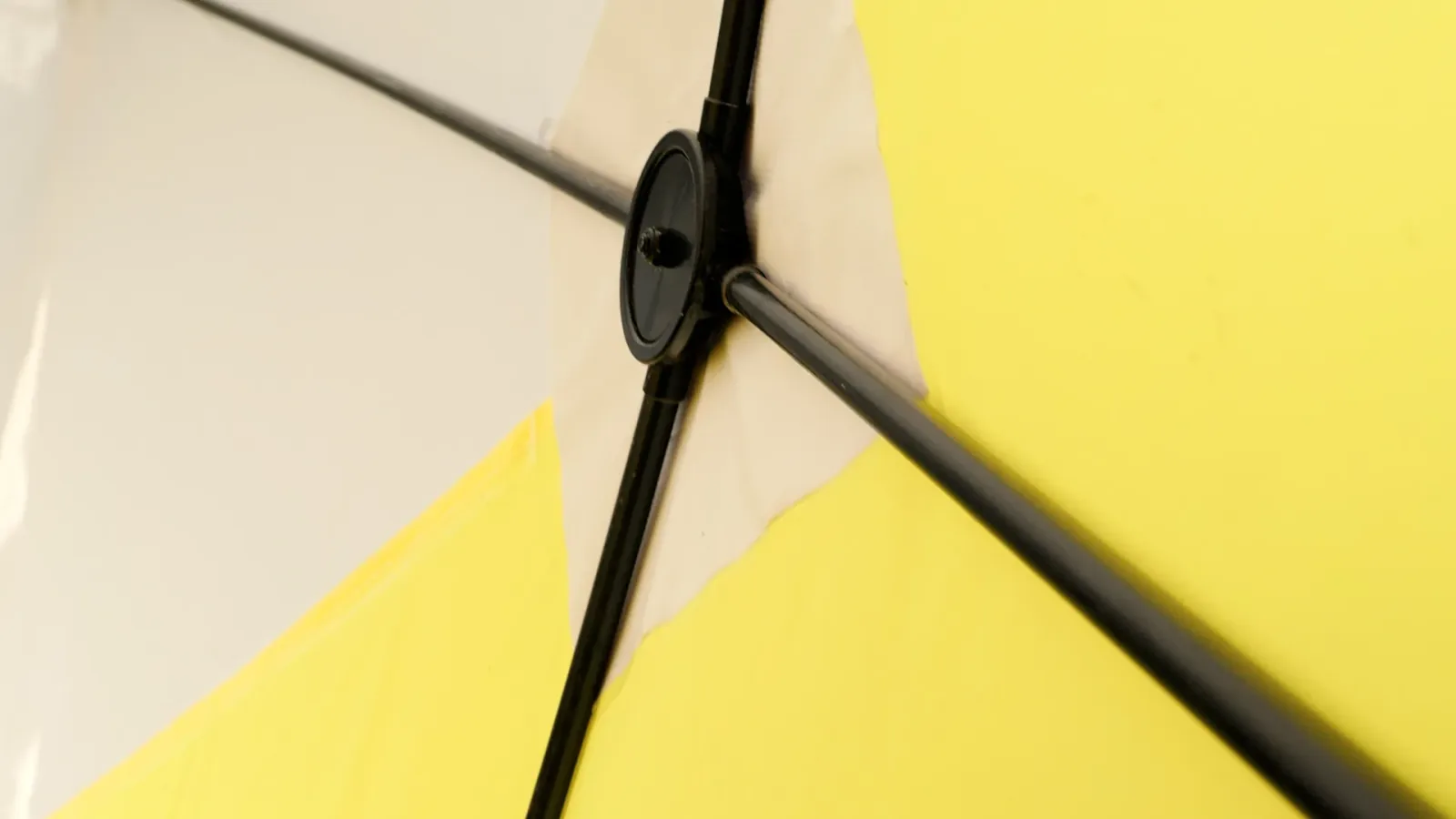
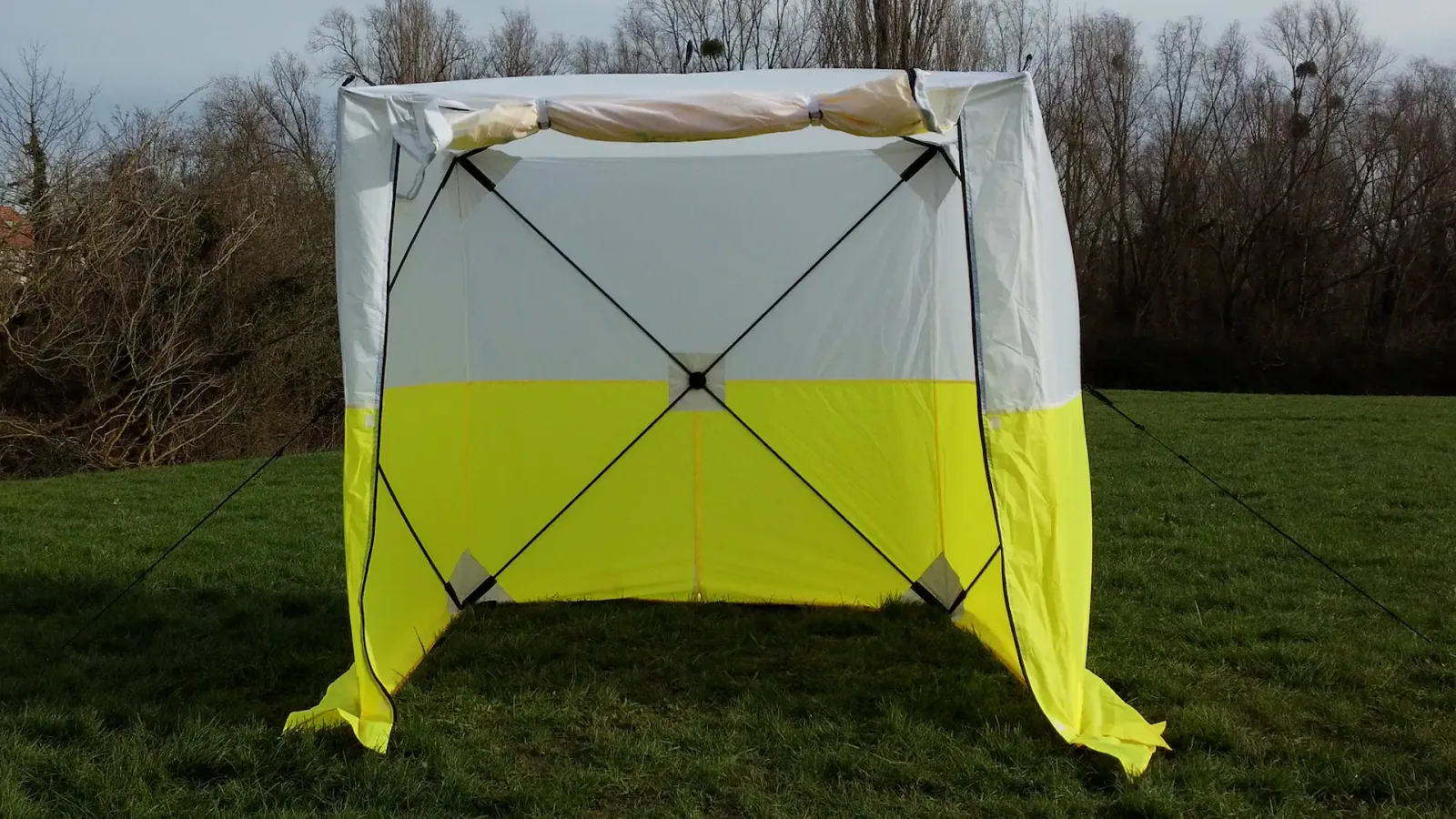
Choosing a work tent often starts with the frame material or the fabric certification. Both matter, but they come after a more down-to-earth question: how many people and how much gear need to fit under it at the same time. Too small, and you end up working hunched over or leaving tools out in the rain. Too big, and the tent is harder to haul and store for no good reason.
Count workstations, not people
The natural reflex is to count the people on site. That's a poor guide: two techs working side by side on the same cabinet don't need the same floor space as two techs who each have their own workbench or cable reel.
A better measure is the number of separate workstations you need to cover at the same time: a fiber splicing station, an electrician's workbench, a spot to stage tools. If you have several separate stations, go wider rather than taller.
Leave room for bulky gear
A job in a street-side fiber cabinet or on an electrical panel rarely calls for more than a folding table and a toolbox. Connection work or a job at a distribution cabinet is another story: you may need a cable reel, a splicer case and room to pay out cable. The gear, not just the people, sets the usable width.
A simple check before you buy: list everything that has to fit under the tent at the same time, then compare it with the dimensions listed on the product page instead of eyeballing them from a lifestyle photo.
Height matters as much as floor space
A wide but low tent keeps you bent over, which wears you out and slows down a long job. If you work standing, leaning over a workbench or an open cabinet, check the inside height before the width. The product page usually spells that out better than a lifestyle shot.
On the other hand, a crew that spends most of its time crouched or kneeling, for example on low work over buried lines, can go with a more compact tent that comes out faster, rather than a tall model that does nothing for them that day.
Think about transport, not just the job
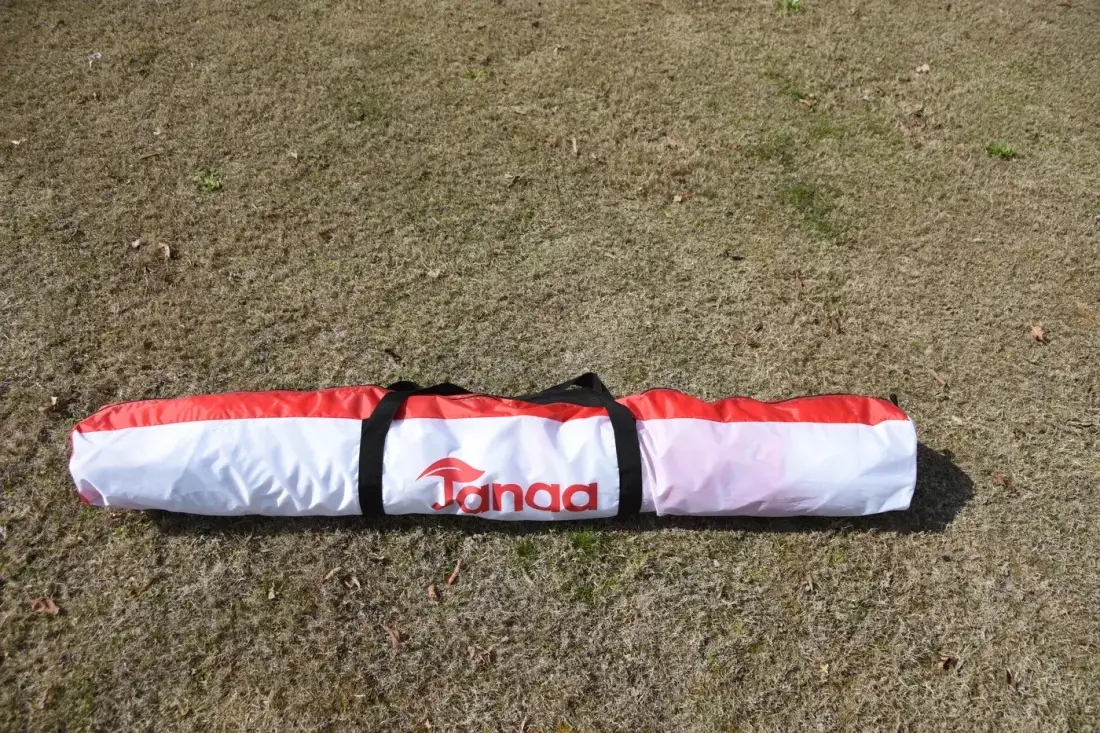
A pop-up tent packs into its own bag, and that bag has to fit in the work truck or van alongside the rest of your tools. A bigger tent also means a longer, heavier bag, the kind that takes two people to carry. If the truck is already full, this can weigh as much as working space in your final choice.
It's also a question of how often you set up. A tent that comes out and gets folded several times a day should stay easy for one person to handle, even if that means giving up a foot or so of width.
A bigger tent needs more anchoring
The bigger the tent, the more surface it exposes to the wind, and a wide model catches more of every gust. The 4 stakes that come with the tent are the minimum at any size. On a compact model, guy ropes mostly matter once the wind really picks up; on a wide tent, they earn their keep as soon as the wind is moderate. On hard ground, also plan for ballast weights of about 22 to 33 lbs (10 to 15 kg), matched to how much fabric they have to hold down.
Compare before you decide, not after
If your crew or your gear outgrows what a single pop-up tent can reasonably hold, the answer isn't necessarily an even bigger tent. A canopy or a gazebo assembled on site may be a better fit for a large crew and a more stationary setup over several days. Comparing these three structures before you buy keeps you from pushing a pop-up beyond what it's designed for.
Practical tip
Before you buy, list the workstations and the gear you need to shelter, then compare that list with the exact dimensions on the product page rather than with a lifestyle photo. That's what saves you from a bad surprise the first time you set it up.
The bottom line
The right work tent size comes from what the tent has to shelter, not the other way around. Count workstations rather than people, check height as closely as width, plan for daily transport and for anchoring: those four checks are enough to avoid both the tent that's too tight and the bulky one that ends up never leaving the shop.

JAX3 Work Tent
Sets up in about 60 seconds · Comes with 4 heavy-duty stakes and guy ropes · About 19 lbs, carry bag included