How to set up a pop-up tent is well documented, and so is how to fold it. What gets far less attention is what happens between jobs: the stretch when the tent is packed away and nobody is looking after it anymore. Yet that's where most of the damage you find later, once the tent comes back out, actually happens.
The one step you can't skip
Technical tent fabric is coated to shed water. That coating does its job very well in one direction: it keeps water out. It also keeps water in. Fabric folded into its bag wet doesn't dry on its own. It stays damp, and at room temperature, mildew takes days to set in, not weeks.
The damage isn't just cosmetic. Stains get into the fibers, the smell never fully goes away, and the seams are hit first, because the thread holds water longer than the fabric does.
The rule fits in one sentence: never pack away a tent that isn't dry, even if it feels dry to the touch. If the job wraps up in the rain and you have to load up, fold it for the drive, then set it back up that same evening to dry.
Dry it, but dry it the right way
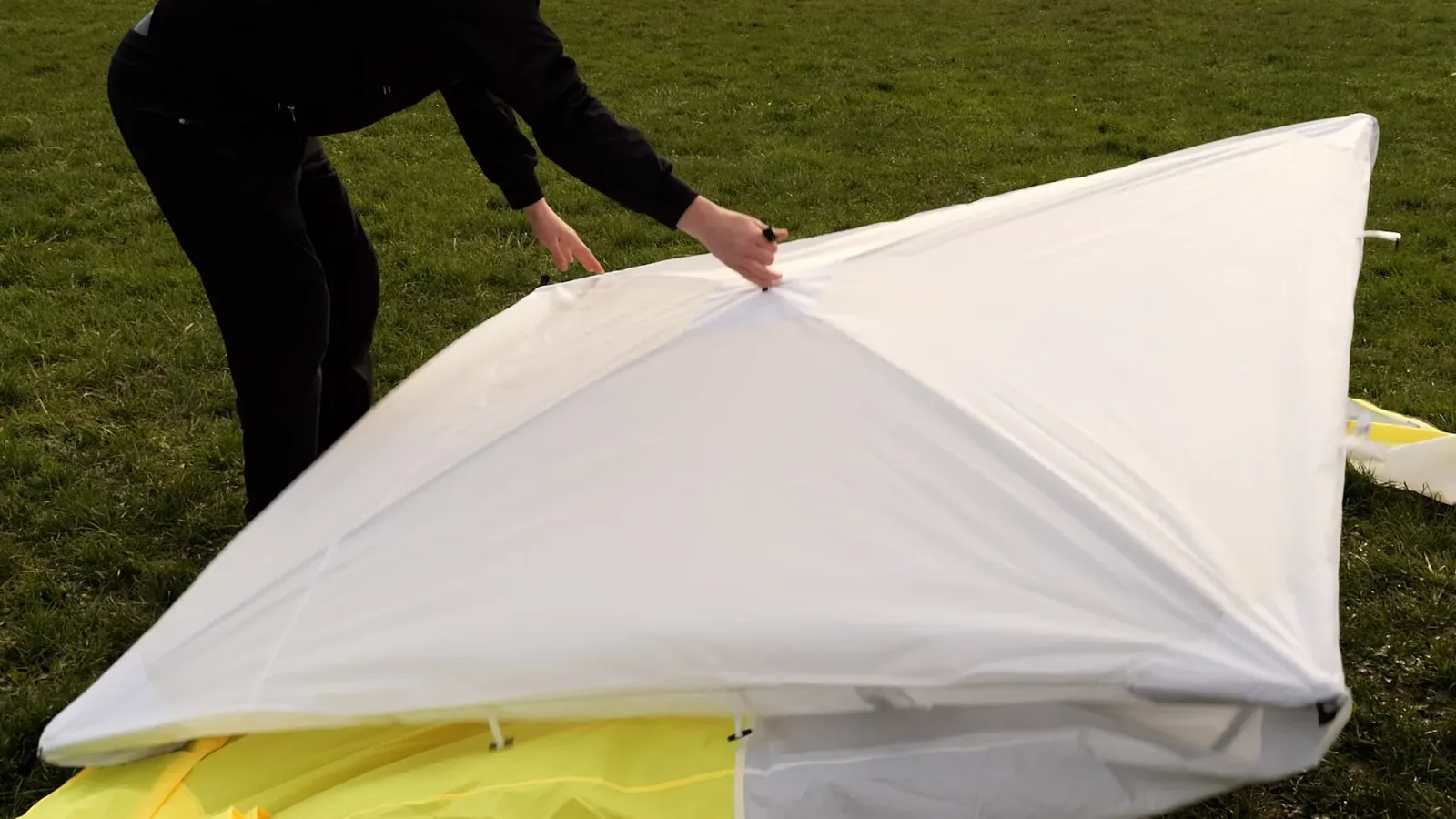
Dry the tent set up or opened wide, in the shade, with air moving through it. In direct sun it dries fast, but the coating ages and the fabric fades. A tent left standing outside all summer isn't stored, it's exposed.
Clean it without stripping the coating
Job site dust, dirt and concrete splatter come off with plain water and a soft sponge, with the tent set up. It's nothing fancy, and almost every time it's all you need.
What to avoid matters more than what to do. A pressure washer lifts the coating and opens up the seams: it has no business near technical fabric. Solvents, acetone and denatured alcohol dissolve the coating instead of cleaning off the dirt. And a washing machine folds and rubs the fabric every which way, which no coating can take.
For a stubborn grease stain, use lukewarm water and a mild soap, don't scrub hard, and rinse with clean water. Then let it dry before you fold it. Every time.
The frame and the accessories
The fabric gets all the attention, but it's often an accessory that's missing on the next job. Stakes and guy ropes get stored with the tent, not in some corner of the van: a complete tent is a tent you can anchor.
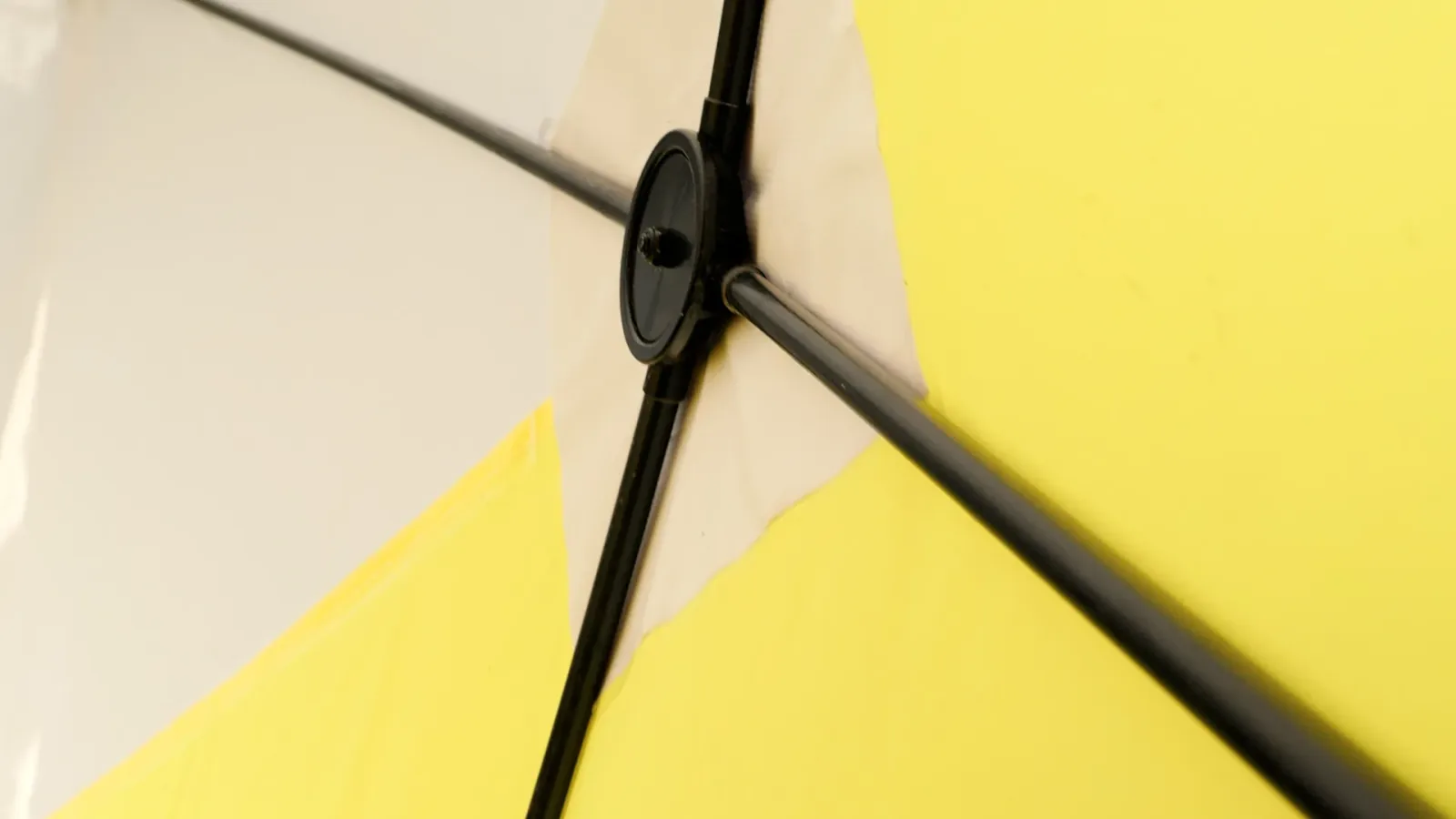
On the frame, two things deserve a quick look when you put it away. First, sand and dirt in the joints: a dry rag wipes them out, and if you leave them in, they scratch and jam the connections. Second, bent poles: a pole that doesn't spring back to its exact shape should be flagged right away, because forcing it won't fix it.
Storage between jobs
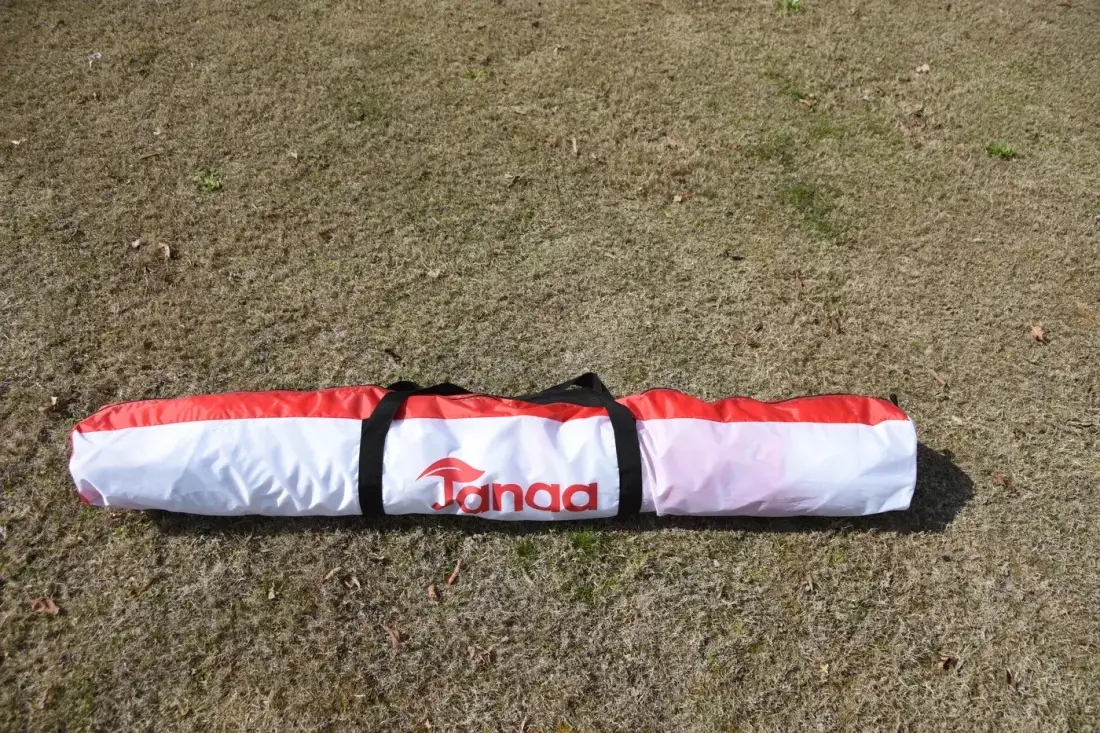
A bag left on the floor of a shop or storeroom soaks up moisture from below, and a bag wedged under heavy gear keeps its folds in the same place every time. The fabric ends up creased along those folds, and a crease that keeps coming back turns into wear.
Three simple rules cover it: flat or hanging, never crushed under equipment; off the ground, never sitting directly on concrete; away from big temperature swings, which make moisture condense inside the bag. The back of a van parked outside checks all three wrong boxes, which explains a lot of worn-out tents.
If the tent is going to sit for several months, taking it out of the bag halfway through to air it out takes ten minutes and saves you from discovering the problem on the morning of a job.
The check before it goes back into service
Before you head into a new season, set the tent up once somewhere quiet, not on the job site. Look over the seams and stress points, especially the corners and where the guy ropes attach. Check that the zippers run without forcing. Count the stakes. Look for water rings and black spots, which mean moisture wasn't fully dried out the last time it was put away.
A small tear caught at this stage can be fixed with a self-adhesive patch made for coated fabric. The same tear found in the wind, in the middle of a job, can run along the weave in a matter of minutes.
The bottom line
Dry it before you pack it, wash it with plain water, store it dry and off the ground, check it before it goes back out. None of these steps takes special equipment, and they are what decide the condition of the fabric when you pick it back up. Folding is a topic of its own: our article on common pop-up work tent setup mistakes walks you through the right motion.

JAX3 Work Tent
Tool-free setup · Reinforced Oxford fabric, PU3000mm waterproof coating · 4 heavy-duty stakes and guy ropes included